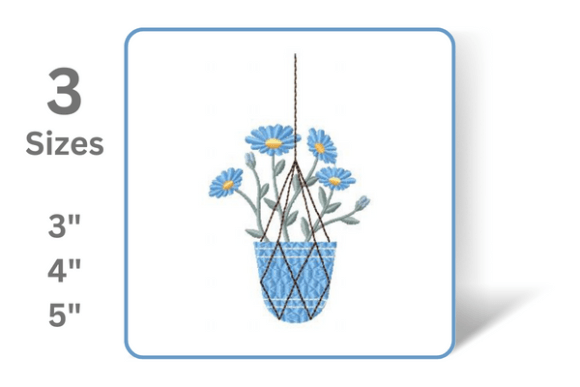
Hanging Flower: A Designer’s Real-World Embroidery Review
First Impressions: Soft, Flowing, and Quietly Confident
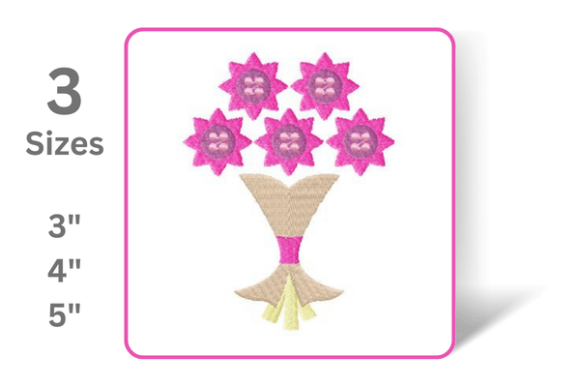
When I opened Hanging Flower for the first time, what struck me wasn’t flashiness—it was balance. The design carries a gentle, organic rhythm: petals that drape rather than flare, a central bloom with subtle dimension, and stems that curve like quiet breaths. It doesn’t shout “floral”—it invites you in. As a designer who’s stitched hundreds of embroidery files for client projects and small-batch merchandise, I immediately saw its versatility—not as a generic filler, but as a considered visual anchor. It reads as handmade without leaning into rustic cliché, and elegant without feeling stiff. That matters when you’re building trust through a finished product.
Real Project Test: A Linen Tote Bag for a Local Boutique
Last week, I used Hanging Flower on a natural linen tote for a small shop launching a spring collection. No frills—just the design centered on the front panel, stitched in soft peach, sage, and ivory thread. The result? Customers paused. Not because it was loud or oversized, but because it felt *intentional*. The shape scaled beautifully across the fabric’s open surface, and the stitch flow followed the grain without pulling or distorting. That’s where Hanging Flower earns its keep: it doesn’t fight the material—it partners with it.
Where It Shines (and Where to Pause)
Hanging Flower works especially well for:
- Custom apparel: Sweatshirts, lightweight knits, and structured cotton tees—especially on chest or sleeve placements where movement is minimal.
- Home textiles: Pillow covers, tea towels, and aprons benefit from its graceful vertical orientation and breathable spacing.
- Personalized gifts: Baby onesies, nursery wall hangings, and holiday kitchen linens gain warmth without clutter.
- Small business merchandise: As a standalone motif on boutique totes or embroidered patches, it reinforces brand calmness and craft care.
But—and this is where experience kicks in—Hanging Flower asks for thoughtful placement on certain substrates:
- Stretchy fabric: Requires cutaway stabilizer and reduced top tension; the stem curves can pucker if the base layer shifts.
- Textured fabrics (like terry cloth or bouclé): Fill stitch density needs checking—some petals may sink into loops unless digitized with slight lift or underlay.
- Curved surfaces (caps, curved pockets): Avoid placing the full stem length across the crown; break it into two smaller placements or rotate to follow contour.
- Dark or heavily printed backgrounds: Test contrast early—light thread colors may need an extra underlay or slightly heavier satin stitch to stay legible.
What It Adds to Your Finished Product—Beyond Pretty
This isn’t just about aesthetics. Hanging Flower quietly lifts perceived value. On a plain cotton towel, it transforms utility into heirloom energy. On a child’s romper, it reads as tender attention—not mass-produced decoration. For Etsy sellers and craft fair vendors, that nuance builds buyer confidence: customers don’t just buy a flower—they buy proof of care, consistency, and design judgment. And because it avoids tight corners, micro-detailing, or dense fill areas, it stitches cleanly across machine types and thread brands, reducing rework in commercial embroidery batches.
Designer Notes You’ll Actually Use
Before stitching Hanging Flower into your next project, here’s what I do—and recommend:
- Test on scrap fabric first, using your exact stabilizer + thread combo. Linen behaves differently than quilting cotton, which behaves differently than French terry.
- Check stitch density visually—not just in software. Dense fills can flatten texture; open areas should still read as intentional, not sparse.
- Confirm hoop size compatibility. While the description says it works on “any fabric,” the physical footprint matters—especially for small hoops on baby caps or narrow garment plackets.
- Inspect small details in black-and-white mockups. Does the petal edge hold clarity at 3x4” scale? Will it translate in a printable mockup for your Etsy listing?
- Compare light vs. dark fabric backgrounds side-by-side. Some floral designs lose shape on black—but Hanging Flower’s clean outlines and moderate contrast hold up better than most.
- Use proper stabilizer: Medium-weight cutaway for knits, tear-away for stable wovens, and water-soluble for delicate layers like silk-blend pillow covers.
- Verify licensing before selling finished items or digital embroidery files. This is non-negotiable for craft businesses and digital product sellers.
Final Thought: Not Just Another Floral
In a market flooded with busy, over-digitized florals, Hanging Flower stands out by doing less—and doing it well. It’s not built for maximum stitch count or Instagram pop. It’s built for longevity in real use: the toddler who pulls at her embroidered bib, the coffee shop owner who washes her branded apron weekly, the bride who folds her embroidered handkerchief into her keepsake box. As a machine embroidery design, it balances technical reliability with emotional resonance—and that’s rare.
If you’re selecting embroidery files for custom apparel, boutique merchandise, or digital design assets, treat Hanging Flower as a quiet upgrade: one that supports your craftsmanship instead of competing with it.