The Simple Elephant Silhouette
A Minimalist Icon with Quiet Confidence
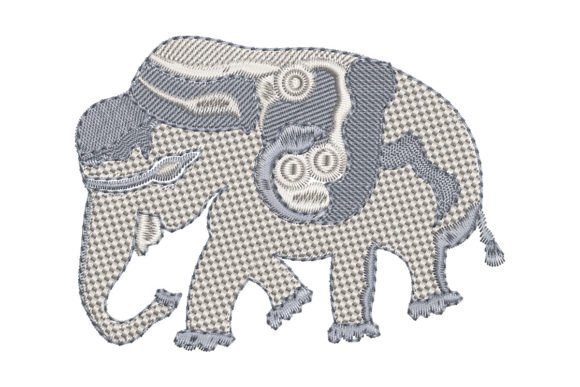
As an embroidery designer who’s stitched hundreds of animal motifs for boutique apparel, my first impression of The Simple Elephant Silhouette is immediate and grounding: it’s not cute. It’s not cartoonish. It’s not overly detailed or fussy. Instead, it carries a gentle authority—clean, intentional, and unmistakably elephantine. The lines are fluid but precise, the curve of the trunk subtle yet expressive, the ear shape generous without overwhelming the form. This isn’t just an Animals category filler—it’s a design that reads as premium at a glance, even before thread hits fabric. For small shops building visual consistency, that quiet strength matters.
Why It Works So Well on Sweatshirts & Hoodies
The Simple Elephant Silhouette thrives on relaxed, textured apparel. On neutral heather grey sweatshirts, it reads with soft contrast—especially in matte cotton or rayon threads. On pastel hoodies (think blush, sage, or sky blue), it adds grounded warmth without competing. And on dark garments—navy, charcoal, or black—it holds its shape beautifully, provided you choose a high-contrast thread like ecru, cream, or warm ivory. Its minimalist construction avoids dense stitch clusters, making it forgiving on fleece and ribbed fabric where heavy fill areas can pucker or distort.
I’ve tested similar silhouettes on oversized hoodies: placement matters. Centered on the chest? Strong and balanced. Upper left sleeve? A subtle signature touch. Back yoke? Surprisingly elegant—especially when scaled to 3.5"–4". Because the design lacks interior detail, it doesn’t lose legibility when resized down to 2.25" for petite chest placements—a real win for youth sizes or delicate unisex fits.
More Than Just Apparel: Totes, Denim, and Lifestyle Context
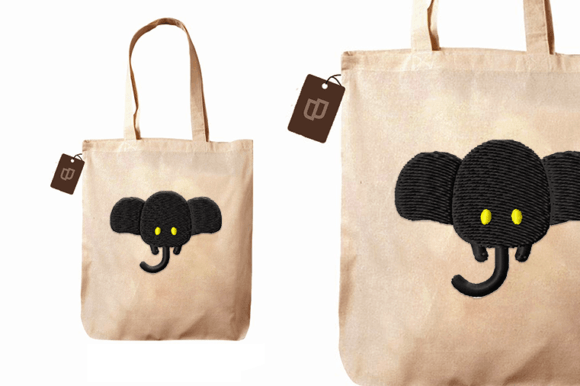
This Creative Fabrica embroidery file transitions effortlessly beyond clothing. On natural canvas totes, The Simple Elephant Silhouette feels artisanal—not graphic, not trendy, but timeless. Paired with hand-stamped tags or linen labels, it elevates handmade product perception instantly. On denim jackets, it anchors a minimalist look—no need for florals or script to soften it; the elephant’s inherent gentleness does that work.
For lifestyle product photos and printable mockups, the silhouette’s clean edges render crisply across digital formats. No jagged vectors, no pixelated fills—just one confident contour. That translates directly to stronger Etsy listings and Instagram posts where visual clarity drives engagement. Buyers scroll fast; The Simple Elephant Silhouette stops them—not with flash, but with calm recognition.
Where Caution Meets Craftsmanship
Even strong designs have boundaries. The Simple Elephant Silhouette performs best on stable, medium-weight fabrics. On highly stretchy knits (like lightweight jersey tees), I recommend testing with tear-away + cutaway stabilizer combo—and confirming hoop size fits your garment’s seam allowance. Curved surfaces (like rounded pocket hems or tapered sleeves) may require re-hooping or light fabric manipulation to keep lines smooth.
Avoid pairing it with tiny lettering or fine decorative borders unless you’re certain of stitch density balance. Its strength lies in simplicity—adding complexity risks diluting its quiet impact. Also, double-check how it behaves on ribbed fabric: while its open shape handles texture better than dense motifs, always run a test on scrap from your actual production batch.
Building Brand Trust, One Stitch at a Time
For Etsy sellers, small shop products, and emerging boutique brands, consistency builds trust faster than any marketing campaign. When The Simple Elephant Silhouette appears across sweatshirts, tote bags, and seasonal loungewear—always in the same scale, same thread palette, same placement—it quietly reinforces brand identity. Customers begin to associate that silhouette with quality, intention, and care. That’s not branding by slogan—it’s branding by repetition, restraint, and recognition.
It also signals professionalism. Unlike overly busy or low-resolution embroidery files, this machine embroidery design reads as curated. Buyers notice the difference between “designed for print” and “designed for stitch”—and they pay more for the latter. In competitive spaces like custom apparel or handmade children’s wear, that perceived value lifts average order value and repeat purchase rates.
Practical Designer Notes Before You Stitch
- Test on scrap fabric—especially if using fleece, ribbed knit, or dark apparel.
- Confirm stabilizer choice: medium-weight cutaway works best for stretchy or unstable fabrics; tear-away suffices for stable cottons and canvas.
- Review thread color contrast—light threads on dark fabric often need an extra underlay pass for coverage.
- Check hoop size compatibility before digitizing or resizing—some versions may be optimized for 4"x4" hoops.
- Inspect stitch density visually in your embroidery software—minimalist doesn’t mean sparse; ensure trunk and ear curves retain definition at smaller scales.
- Test on similar garment fabric—a cotton tee behaves differently than a French terry hoodie.
- Compare placement options on mockups before finalizing production layouts.
- Verify licensing terms on Creative Fabrica—confirm commercial use rights for finished apparel before launching your collection.
Final Thought: Less Is Anchored, Not Empty
In a market flooded with maximalist animal embroidery, The Simple Elephant Silhouette stands apart—not by shouting, but by holding space. It’s the kind of digital embroidery file that makes your boutique brand feel considered, your commercial embroidery output feel elevated, and your customer’s unboxing moment feel intentional. Whether you’re launching a cozy seasonal line or building a signature motif for your handmade product shop, this design earns its place—not as decoration, but as quiet signature.