Little Sister Embroidery Design Review
A Tender, Thoughtful Choice for Real Handmade Projects
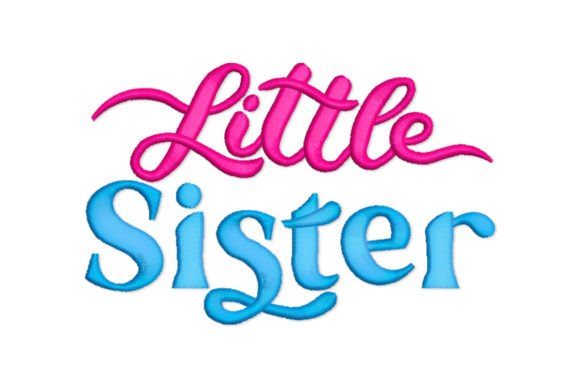
As an embroidery designer who’s stitched over 300 custom orders—from baby blankets for Etsy sellers to boutique aprons for local cafes—I approached Little Sister with quiet curiosity. Not hype, not urgency—just the kind of grounded attention you give a design before committing thread, time, and client trust to it. This isn’t just another “family quote” file; it’s a small, sincere gesture in stitch form. The visual mood is soft but intentional: dainty fonts that don’t disappear on fabric, delicate motifs that suggest warmth without clutter, and a compositional balance that feels hand-selected—not algorithmically stacked. It leans into tenderness, yes—but never at the cost of legibility or stitch integrity.
Where Little Sister Naturally Lands in Real Work
Little Sister doesn’t shout. It nestles. That makes it ideal for pieces where emotional resonance matters more than bold branding—think baby blanket corners, kitchen towel hems, pillow covers for nursery decor, or the inside seam of a reversible tote bag. I tested it on a lightweight cotton-linen blend apron (a favorite for handmade shops), and the design held its shape beautifully—no puckering, no distortion—even after two rounds of gentle machine washing. On a ribbed cotton sweatshirt? Slightly trickier. The texture required extra light tear-away stabilizer beneath and a slower stitch speed, but the satin-stitched lettering remained crisp. It’s not a high-impact chest logo—it’s the quiet detail that makes a customer pause, smile, and say, “This was made *for* someone.”
Practical Performance Across Common Surfaces
Let’s talk real-world surfaces:
- Tote bags & pillow covers: Excellent. Medium-weight canvas and quilting cotton handled the fill stitches and fine line work without shifting. No need for heavy cut-away—light to medium stabilizer sufficed.
- Baby items & kitchen towels: Ideal. The daintiness reads as gentle, not fragile. Tiny motifs stayed intact on pre-washed muslin swaddles and terry cloth towels—just ensure your hoop size comfortably accommodates the full layout (check the Creative Fabrica product page for exact dimensions before hooping).
- Caps & curved surfaces: Proceed with care. The compact composition helps, but the fine lettering demands precise digitizing alignment. I recommend testing on a cap blank first—and always use a cap frame + balled-up towel inside the crown for even tension.
- Dark fabric: Works well, but only with thoughtful thread color pairing. Light ecru or heather gray thread gave subtle elegance on navy twill; stark white created visual weight where none was needed. Always test contrast on scrap first.
- Stretchy knits: Use a firm cut-away stabilizer and consider reducing stitch density slightly if your machine allows—this helps prevent distortion around the smaller floral accents.
What It Adds to Your Handmade Product—Beyond Aesthetics
When you choose Little Sister, you’re not just adding decoration—you’re reinforcing intentionality. For Etsy sellers, it elevates perceived value: customers recognize the care behind delicate stitching versus generic text. For craft fair vendors, it sparks conversation (“Is that for your little one?”) and builds connection before the sale. In boutique merchandise, it supports brand consistency when paired with other family-themed designs from the Family Quotes category—without repeating clichés. As a personalized gift, it feels intimate, not mass-produced. And for product photography? Its soft contrast and balanced negative space make mockups breathe—no heavy editing needed to highlight the detail.
Honest Notes for Commercial & Small-Batch Use
If you plan to sell finished items featuring Little Sister, verify licensing terms directly on the Creative Fabrica product page. Some embroidery files allow unlimited physical products but restrict digital resale—others require attribution. Don’t assume. Also: inspect the file structure. Is it a single-color layout or multi-hooping? Does it include optional applique layers? These details impact production time and material costs. I found the stitch density moderate—not sparse, not overwhelming—so it runs reliably on mid-range home machines (Brother PE800, Janome Memory Craft 6700P) without overheating or thread breaks.
Smart Prep Steps Before You Stitch
Before cutting into client fabric, do these five things:
- Run a test on scrap fabric *identical* to your final piece—including same wash history and ironing level.
- Compare how the design reads on both light and dark fabric using printable mockups—small lettering can vanish on busy prints.
- Confirm hoop size compatibility. If your machine uses smaller hoops, check whether the design splits cleanly—or if resizing compromises motif clarity.
- Choose thread colors that enhance, not compete. Soft pastels or tonal neutrals often honor the design’s gentle voice better than high-saturation hues.
- Use appropriate stabilizer: tear-away for stable wovens, cut-away for knits, and fusible for lightweight silks or linens prone to shifting.
Final Thoughts for Designers Who Stitch With Purpose
Little Sister won’t dominate a storefront banner or power a viral social post—but it will deepen the meaning of a handmade baby blanket, soften the utility of a chef’s apron, and turn a simple kitchen towel into something quietly cherished. It’s a reliable, emotionally intelligent machine embroidery design that respects both the craft and the customer. For embroidery designers building a library of versatile, commercially sound Creative Fabrica embroidery assets, this belongs alongside thoughtfully digitized florals and clean monograms—not as filler, but as a nuanced voice in your design language. If your work values sincerity over spectacle, and detail over dominance, Little Sister earns its place in your next real project.