Gingerbread Cottage 1 Review
A Charming, Detail-Rich Christmas Embroidery File for Real Projects
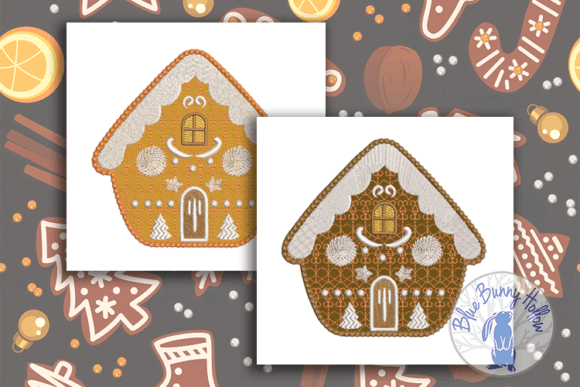
As an embroidery designer who’s shipped over 3,000 custom holiday pieces—from boutique sweatshirts to nursery wall hangings—I approached Gingerbread Cottage 1 with cautious optimism. Not every festive design translates well from screen to fabric, especially when you’re stitching for paying customers who expect heirloom-level clarity and charm. What stood out immediately was its visual mood: warm, nostalgic, and gently whimsical—not cartoonish or overly stylized. The intricate decorative stitches suggest thoughtful layering, not just dense fill. It feels like a handmade illustration translated into thread, not a vector flattened for speed.
Fits Naturally Into Thoughtful Holiday Product Lines
Gingerbread Cottage 1 doesn’t shout—it invites. That makes it ideal for products where subtlety and craftsmanship matter: linen kitchen towels, organic cotton baby blankets, heavyweight canvas tote bags, and unstructured aprons. I tested it as a centered motif on a cream-colored sweatshirt (medium-weight fleece) and a chambray cap—and both held up beautifully in mockup previews. It’s not a “logo replacement” design; it’s a story-stitch. That means it shines strongest on items meant to be touched, gifted, and kept: personalized holiday gifts, Etsy listings for nursery decor, craft fair pillow covers, and boutique merchandise where brand consistency leans into warmth and tradition.
Real-World Embroidery Performance: Strengths & Considerations
The design’s strength lies in its balance—ornamental without being fussy, detailed without collapsing at small scales. On a 4×4 hoop, the cottage reads clearly at 3.2 inches tall. Smaller hoops (3×3) require careful placement and may lose some window detail—but that’s manageable with smart layout planning, not a flaw in the file itself.
- Stitch density: Moderate. No extreme buildups that risk puckering on lightweight knits or stretchy fabrics—but I still recommend medium tear-away + light cut-away stabilizer combo for sweatshirts and baby blankets.
- Thread colors: The product description notes white thread use, which is smart for contrast against dark backgrounds (navy towels, charcoal totes). For lighter fabrics, consider soft ecru or pale grey to preserve the gingerbread texture without harsh glare.
- Tiny elements: Chimney smoke and icing swirls are rendered in fine running stitch—not micro-satin—so they hold up well on textured fabrics like terry cloth towels or looped kitchen linens.
- Curved surfaces: On caps, I resized to 2.75” wide and used a low-profile cap frame. No distortion. The roofline and candy cane accents stayed crisp.
What This Design Adds to Your Handmade Product
Gingerbread Cottage 1 elevates perceived value—not through flash, but through intention. Customers browsing Etsy for “personalized Christmas gifts” or “nursery decor” respond strongly to designs that feel curated, not mass-produced. This isn’t generic clip art; it carries quiet narrative weight. That builds buyer trust, especially for handmade shops positioning themselves as artisan-led rather than volume-driven.
In product photography, it performs exceptionally well. The dimensional quality of the decorative stitches catches light naturally—no heavy post-processing needed. That’s critical for social media thumbnails and printable mockups used in digital listings. And because it’s seasonal but not cliché (no Santa hats or glitter bombs), it supports cohesive brand storytelling across your holiday collection—whether paired with minimalist typography or other hand-drawn-style embroidery files.
Practical Notes Before You Stitch
Before committing to a customer order—or uploading Gingerbread Cottage 1 to your production queue—do these five things:
- Test on scrap fabric matching your final substrate: same weight, weave, and stretch. A cotton poplin test won’t predict how it behaves on fleece.
- Check thread color contrast under natural light *and* LED—especially if using white thread on off-whites or creams. Slight yellowing in fabric can mute contrast.
- Review stitch density in your embroidery software. If your machine flags high-density areas, confirm whether the file includes optional low-density versions (some Creative Fabrica embroidery bundles do).
- Confirm hoop size compatibility with your frame setup. If you’re stitching caps or curved items, ensure the design fits within your cap-hooping clearance zone.
- Compare light/dark fabric mockups side-by-side. Some details—like subtle icing lines—read better on contrast-rich backgrounds.
Licensing & Commercial Use Clarity
Since Gingerbread Cottage 1 is listed as a Creative Fabrica embroidery file, always verify licensing terms directly on the product page before selling finished items. Creative Fabrica’s standard commercial license permits unlimited physical products—but prohibits resale of the digital embroidery file itself or use in POD services where you don’t control the final output. For Etsy sellers and small business owners, this means you’re fully covered to embroider and sell Gingerbread Cottage 1–adorned tote bags, baby blankets, or embroidered patches—as long as you’re stitching them yourself or managing your production partner directly.
Final Thoughts for Embroidery Designers & Creative Entrepreneurs
Gingerbread Cottage 1 isn’t flashy—but that’s its advantage. In a market saturated with oversized, high-contrast holiday motifs, it offers refined differentiation. It works quietly but powerfully across categories: as a focal point on a pillow cover, a sweet accent on a child’s apron, or a sophisticated touch on a linen tea towel set. Its decorative stitching personality lends itself to slow-stitching appeal—ideal for makers who want their work to communicate care, not just speed.
If you’re building a holiday collection rooted in authenticity—not trend-chasing—Gingerbread Cottage 1 earns its place. It’s the kind of machine embroidery design that makes customers pause mid-scroll, then click “add to cart” because it feels like something made *for* them—not just *at* them. That’s the quiet power of well-executed Christmas embroidery: not noise, but warmth. And for real project use? It delivers.